

Digital Screens' Role in Tourist Engagement: 2026 Guide

Digital screens are defined as the primary technology reshaping how visitors experience destinations, transforming passive sightseeing into interactive, real-time, and personalized encounters. The role of digital screens in tourist engagement spans every touchpoint of the visitor journey, from airport arrivals to museum galleries and hotel lobbies. Platforms like Signstream, deployments like Miami International Airport’s AI assistant, and interactive sites like the Louvre Abu Dhabi’s digital portal demonstrate how far this technology has advanced. This guide covers what works, what the research says, and how you can apply it.
How do digital screens enhance tourist engagement and satisfaction?
Interactive technology significantly enhances visitor engagement, perceived authenticity, and overall satisfaction. A structural equation modeling study with 189 visitors at a science museum in Ethiopia confirmed these effects directly. That finding matters because it shows the impact holds even in resource-limited settings, not just flagship Western attractions.
Interactivity is defined as a user’s ability to influence content and receive real-time feedback. Interactivity links directly to knowledge absorption, emotional connection, and perceived value in museum digital displays. When a visitor can choose what they explore, they feel ownership over the experience. That sense of autonomy is what separates a memorable visit from a forgettable one.
The most effective interactive formats in tourism include:
Augmented reality overlays that place historical context directly onto physical artifacts or landmarks
Virtual tours that let visitors preview or revisit spaces on their own schedule
Digital puzzles and quizzes embedded in exhibit screens that reinforce learning through play
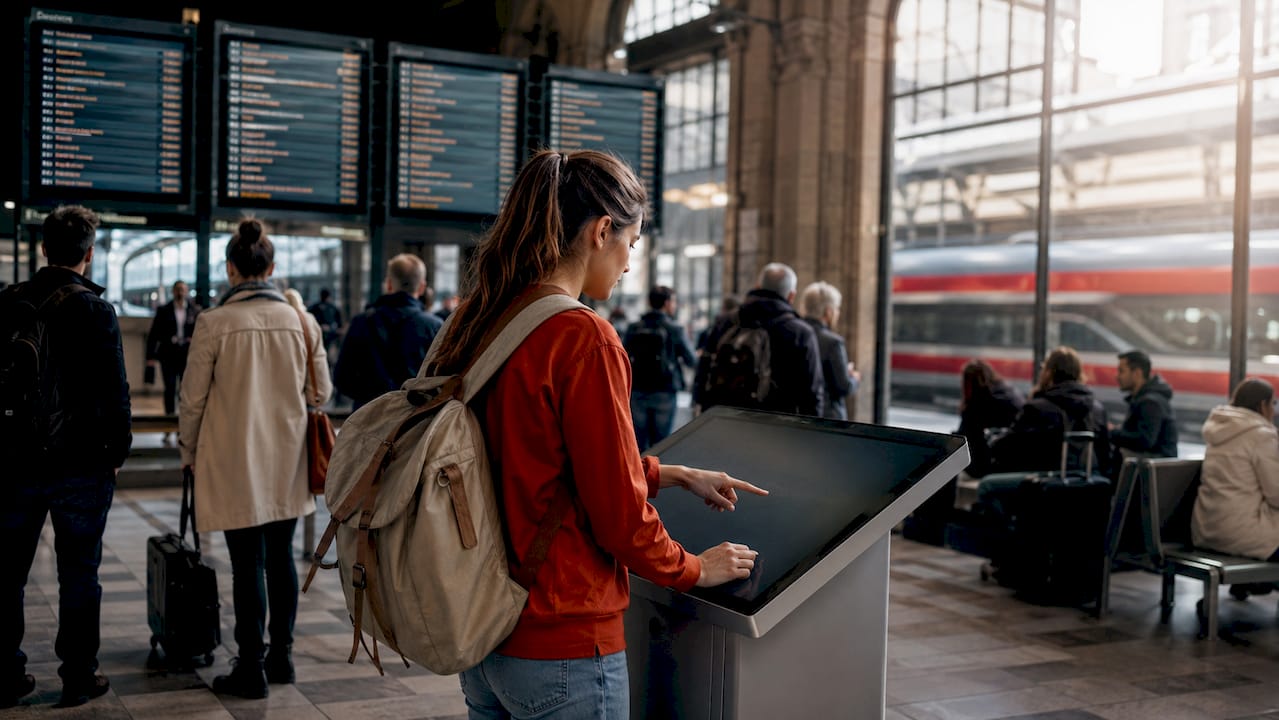
Touchscreen kiosks offering multilingual wayfinding and personalized itinerary suggestions
AI-powered chat interfaces that answer visitor questions in real time without staff involvement
Effective interactivity translates into perceived authenticity, not mere novelty. Visitors who feel genuinely engaged report higher satisfaction scores and stronger intentions to return. The emotional connection created by good interactivity is the mechanism behind those outcomes.
Pro Tip: Design interactive screens to give visitors choices, not just information. A screen that asks “What interests you most?” and adjusts its content accordingly creates far stronger emotional engagement than one that simply plays a looping video.
What types of digital screens are used in tourism?
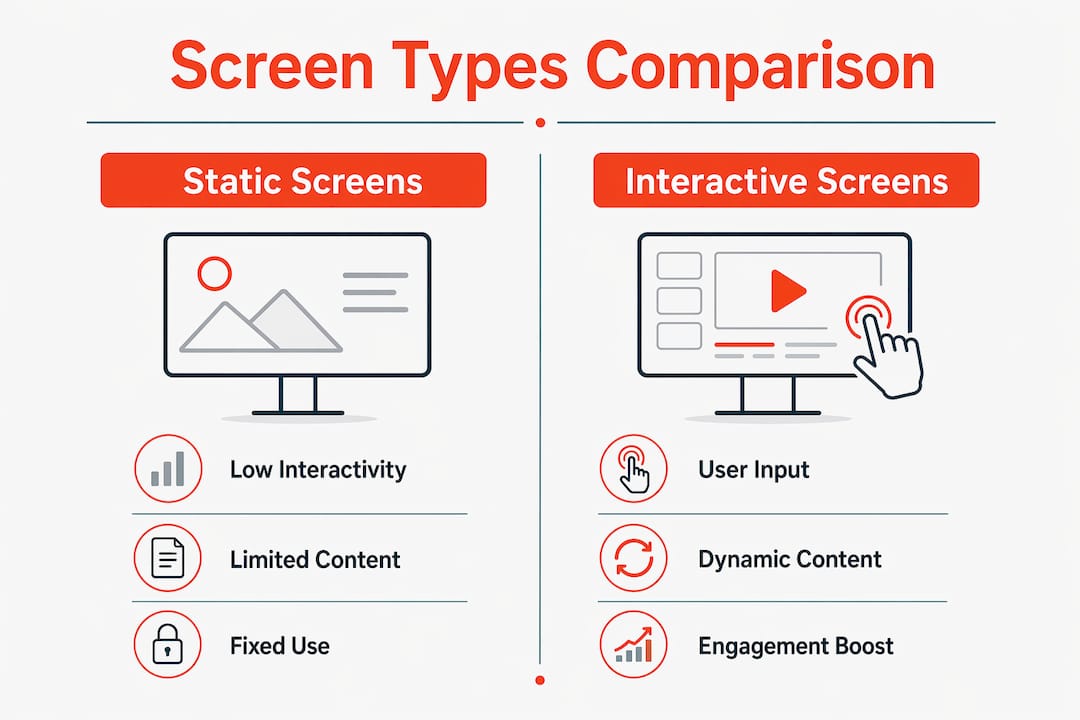
The spectrum of digital screen technology in tourism runs from basic static displays to AI-powered spatial intelligence systems. Understanding the differences helps you choose the right tool for each venue and visitor need.
Comparing screen types across tourism touchpoints
Screen Type | Interactivity | Content Flexibility | Typical Use Case | Accessibility |
Static poster/print | None | Very low | Directional signage | High |
Digital signage display | Low | High (real-time updates) | Lobbies, corridors, waiting areas | High |
Touchscreen kiosk | High | High | Wayfinding, ticketing, FAQs | Moderate |
Interactive website/app | Very high | Very high | Pre-visit planning, virtual tours | High |
Mixed reality (AR/MR) | Very high | Moderate | Heritage sites, museums | Low to moderate |
AI conversational agent | Very high | Dynamic | Airports, large venues | High |
Miami International Airport’s deployment is the clearest example of what advanced digital screen technology looks like at scale. The airport serves 55 million passengers annually and uses an Azure OpenAI-powered AI assistant that delivers geo-aware, multilingual, context-sensitive guidance across web, mobile, kiosks, and holographic displays. That system does not just answer questions. It knows where you are, what language you prefer, and what you likely need next.
The Louvre Abu Dhabi’s interactive website sits at the other end of the deployment spectrum but achieves equally strong results. Usability and learning scores ranged from 4.62 to 4.78 out of 5, with no significant differences across visitor demographics. That means the platform worked equally well for older visitors, first-time users, and tech-savvy millennials. Good design removes demographic barriers entirely.
Mixed reality experiences require a specific note. Content quality drives MR adoption more than the sophistication of the technology itself. Narrative coherence and interpretative design are what make an AR overlay meaningful rather than gimmicky. A well-written story delivered through a basic AR layer outperforms a technically impressive experience with no clear narrative thread.
User-generated virtual tour content adds another dimension, allowing visitors to become co-creators of the digital experience rather than passive recipients. That shift in dynamic significantly increases emotional investment in the destination.
How should tourism professionals design digital screen content?
Content strategy determines whether a digital screen adds value or adds noise. The most common mistake in tourism deployments is treating screens as promotional billboards rather than visitor service tools.
Digital signage focused on promotions consistently underperforms. Coupling content with visitor context, including location, language, timing, and accessibility needs, yields measurably better engagement. The Miami International Airport deployment proved this at scale: context-aware content reduced confusion and frustration across a 55-million-passenger annual flow.
The highest-impact placement locations for digital screens in tourism venues are:
Arrival zones: First impressions set the tone. Screens here should orient, welcome, and reduce anxiety about what comes next.
Wayfinding transitions: Intersections, stairwells, and elevator banks are where visitors feel most uncertain. Screens at these points reduce cognitive load and convert uncertainty into confident next steps.
Waiting areas: Dwell time is an opportunity. Screens in queues or lounges can deliver deeper content, stories, and context that visitors actually have time to absorb.
Pre and post-visit touchpoints: Digital screens in gift shops, cafes, and exits can reinforce the experience and encourage return visits or social sharing.
Narrative integration is non-negotiable for heritage and cultural sites. Immersive technologies require narrative design to impact the tourist experience significantly. A screen showing a 3D reconstruction of a Roman forum needs a story arc, not just a technical render. The story is what makes the visitor care.
Avoid technology overload. Deploying too many interactive elements in a single space creates decision fatigue. Visitors stop engaging when they face too many competing screens or unclear calls to action. One well-placed, well-designed screen outperforms five mediocre ones every time.
Pro Tip: Use geo-aware content triggers wherever possible. A screen near the Egyptian collection should show Egyptian content, not a generic welcome message. Location-specific relevance is the single fastest way to increase dwell time and engagement at any screen.
What is the impact of digital screens on tourist behavior?
Digital screens do more than inform visitors in the moment. They shape long-term behavioral intentions, including the likelihood of returning, recommending the destination, and forming emotional attachments to a place.
Research identifies four key behavioral outcomes driven by strong digital screen experiences:
Increased revisit intention. Immersive digital experiences enhance perceived value and place attachment, which directly drives the desire to return. Visitors who feel connected to a destination are more likely to come back and bring others.
Stronger place attachment. Interactive experiences create cognitive and emotional connections that static signage cannot replicate. When a visitor solves a digital puzzle about a heritage site’s history, they remember that site differently than if they simply read a plaque.
Higher satisfaction scores. Well-designed digital interfaces in cultural tourism engage diverse demographics without significant age, gender, or prior experience bias. Broad accessibility translates directly into broader satisfaction.
Active participation and co-creation. Digital platforms transform visitors from passive observers into active participants. Live virtual guided tours and user-generated content features let visitors contribute their own perspectives, deepening their personal connection to the experience.
Personalization and AI are accelerating all four of these outcomes. When a screen recognizes a returning visitor or adapts its content to a visitor’s stated interests, the experience feels personal rather than generic. That shift from broadcast to conversation is where the real behavioral impact lives. Tourism professionals who invest in personalization infrastructure now will see compounding returns as AI tools become more affordable and accessible.
Key takeaways
Digital screens drive tourist engagement when interactivity, content quality, and context-aware placement work together rather than in isolation.
Point | Details |
Interactivity drives satisfaction | Screens that let visitors influence content produce stronger emotional connection and higher satisfaction scores. |
Content quality beats tech novelty | Narrative coherence and interpretative design matter more than hardware sophistication, especially for mixed reality. |
Placement at decision points is critical | Arrivals, wayfinding transitions, and waiting areas deliver the highest engagement return for digital screen investment. |
Accessibility is achievable by design | Well-designed interfaces like the Louvre Abu Dhabi’s score above 4.6 out of 5 across all visitor demographics. |
Behavioral outcomes extend beyond the visit | Strong digital experiences increase revisit intention, place attachment, and word-of-mouth recommendation. |
The storytelling gap most tourism screens still miss
After reviewing the 2025–2026 research on digital screens in tourism, one pattern stands out clearly: most venues are still deploying screens as information dispensers rather than storytelling platforms. That gap is where the biggest opportunity sits.
The Ethiopia museum study and the Louvre Abu Dhabi results point to the same conclusion. Visitors do not just want data. They want to feel something. The screens that perform best are the ones designed around a visitor’s emotional arc, not just their informational needs. What does this visitor feel when they walk in? What do you want them to feel when they leave? Those two questions should drive every content decision.
The Miami International Airport AI deployment is instructive for a different reason. It works at enormous scale because it is genuinely useful, not because it is impressive. Geo-aware, multilingual, context-sensitive guidance reduces real friction for real people. That is the standard every tourism screen should be held to.
The uncomfortable truth is that most digital screen failures in tourism are content failures, not technology failures. Venues invest in hardware and then populate screens with promotional content that serves the business, not the visitor. Visitors notice. They disengage. The screen becomes wallpaper.
My advice to tourism professionals: treat every screen as a chapter in the story you are telling about your destination. Design for the visitor’s journey, test with real users across age groups and languages, and measure emotional outcomes, not just dwell time. The technology will keep improving. The discipline of great storytelling is what separates the venues that visitors remember from the ones they forget.
— DKS
How Signstream helps tourism venues put this into practice
Signstream’s cloud-based digital signage platform gives tourism venues the tools to act on everything covered in this article, without needing a technical team to manage it.

You can update content across unlimited screens instantly from any device, which means your arrival screens, wayfinding displays, and waiting area content stay current and relevant in real time. Signstream’s interactive ad capabilities let you deliver personalized, location-specific content that matches visitor intent rather than generic promotions. The platform also includes an ad exchange marketplace, so venues can cross-promote with local businesses and generate revenue from their own screens. For tourism venues ready to move from static displays to genuinely engaging visitor experiences, an on-site consultation with Signstream is the fastest way to build a deployment plan that fits your specific venue and visitor flow.
FAQ
What is the role of digital screens in tourist engagement?
Digital screens in tourism are defined as interactive and dynamic information platforms that deliver real-time, personalized, and context-aware content to enhance visitor satisfaction and cultural connection. Research confirms they improve perceived authenticity, learning outcomes, and behavioral intentions like revisit rates.
How do interactive screens differ from standard digital signage?
Standard digital signage displays content passively, while interactive screens allow visitors to influence what they see and receive real-time feedback. That interactivity is the mechanism behind stronger emotional connection and higher satisfaction scores.
Does screen technology or content quality matter more?
Content quality is the primary driver of impact, particularly for mixed reality and AR experiences. A 2026 MDPI study found narrative coherence and interpretative design matter more than the sophistication of the technology itself.
Where should tourism venues place digital screens for maximum impact?
The highest-impact placements are arrival zones, wayfinding transitions, and waiting areas. Research shows screens at these decision points reduce cognitive load and convert visitor uncertainty into confident, positive next steps.
Can digital screens improve long-term visitor loyalty?
Yes. Immersive digital experiences enhance place attachment and perceived value, which directly drives revisit intention and word-of-mouth recommendation. Visitors who engage deeply with a destination’s digital content form stronger emotional connections to the place itself.
Recommended
Comments